University of Dayton

Computer Science Capstone 2026

Team 19 - US Paper CRM


Our Client

US Paper Corporation


US Paper Corp is a family-owned and operated distributor serving businesses throughout the Tampa Bay area. They supply everyday essentials businesses rely on to operate efficiently — from paper products and disposables to janitorial supplies, cleaning chemicals, and takeout containers.

As a local distributor, they focus on reliability, responsiveness, and service. US Paper Corp. works directly with their customers, makes decisions quickly, and takes a practical, straightforward approach to distribution. Whether supporting day-to-day orders or higher-volume needs, they approach every customer relationship with the same level of care and accountability. Their goal is simple: provide the right products, deliver when promised, and make doing business easy.


Our Technology

Twenty CRM


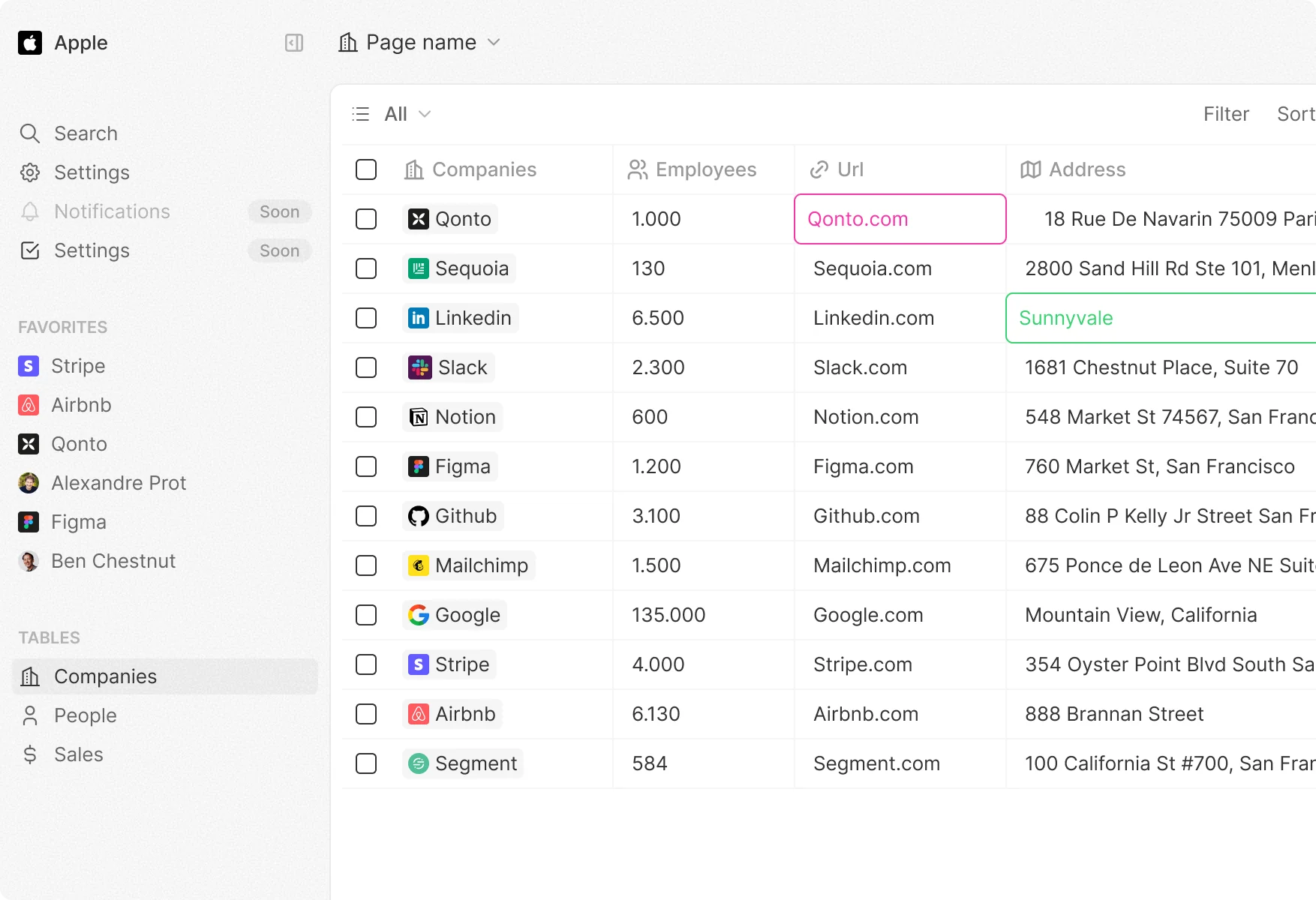
Twenty is a modern, open-source CRM designed as a customizable, self-hostable alternative to traditional platforms like Salesforce, allowing companies to own their data. It offers a clean user interface, pipeline management, and workflow automation. Built with a modern tech stack, it is highly extensible for developers and startups.

After assessing different open-source CRM options to build out for our client, we determined that Twenty was an ideal candidate. Being able to integrate the CRM with outside tools, the ability to self-host, and the sleek design made Twenty stand out as a modern solution to our task.

[Click to show example] Twenty example

Docker


Docker is an open-source platform used for developing, shipping, and running applications in isolated environments called containers. It packages an application with all its dependencies, ensuring it runs consistently regardless of the underlying infrastructure.

By using Docker and Docker Compose to deploy Twenty, we are able to be sure that the CRM stays up to date with the latest bug fixes as well as being easy to stand up on our VPS. After trying to install Twenty from both the source files and from the Docker Compose, we found the process for deploying Twenty to be much more streamlined using Docker.

DigitalOcean


DigitalOcean is a prominent cloud infrastructure provider, widely known for its developer-friendly, high-performance Virtual Private Servers (VPS), which the company brands as Droplets. Founded in 2012, DigitalOcean specializes in providing simple, scalable, and affordable cloud hosting solutions for startups, small-to-medium businesses (SMBs), and developers, offering both shared and dedicated CPU options.

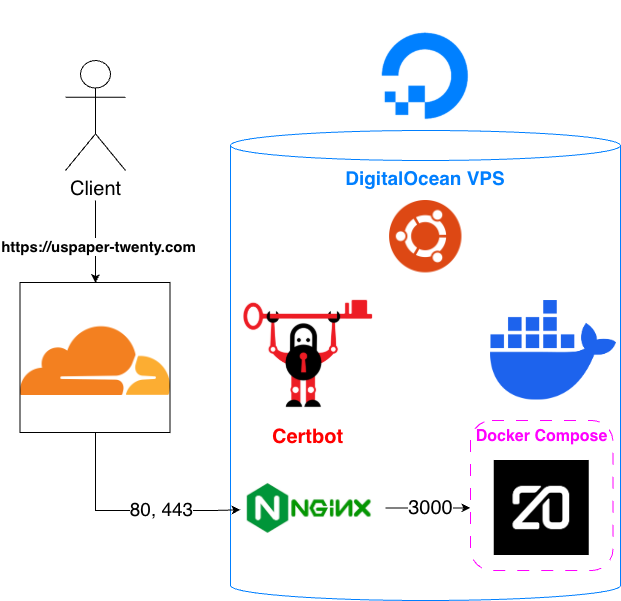
DigitalOcean provided a low-cost and reliable option for our VPS needs. We were able to choose the specifications for the Droplet including the memory size, storage capacity, and base image. Our Droplet uses an Ubuntu Linux image with Docker preinstalled. To access the Droplet, we are able use the Secure Shell Protocol (SSH) to connect and the Secure Copy Protocol (SCP) to transfer files. After using SSH to access the Droplet, we can install Twenty, Nginx, and more to build out the CRM for our client.

[Click to show diagram] DO diagram

Cloudflare


Cloudflare DNS is a blazing-fast, secure, and authoritative DNS service designed for high performance and reliability. It boasts one of the fastest propagation speeds in the industry, utilizing a global Anycast network to reduce latency, combined with built-in DDoS protection, DNSSEC, and CNAME flattening.

We decided to use Cloudflare to purchase a domain name and handle DNS due to its reliability and security benefits. Cloudflare helps block out malicious traffic to our VPS and provides us with many tools to fine tune our networking needs.

NGINX


Our NGINX reverse proxy acts as an intermediary server that sits in front of backend web servers, intercepting client requests and forwarding them to the appropriate server. It then receives the response from the backend server and delivers it to the client, abstracting the backend infrastructure from direct client access.

We also use certbot for generating certificates used for HTTPS, allowing our application to remain even more secure.


Scrum

Month 1


Planning and Research

[Click to show more]

Over the first month of the project, our team focused primarily on planning, requirements clarification, environment research, and aligning our technical direction with the client. A major theme of this month was discovery and decision-making. Rather than immediately building, we intentionally invested time in evaluating options, understanding the client's current infrastructure, and establishing a sustainable development workflow. This foundation-setting phase has positioned us to move into implementation with clearer direction and fewer long-term risks.

From a project management perspective, we established a consistent communication structure early on. We hold a weekly recurring meeting with the client every Wednesday at 1:30 PM. During these meetings, we discuss progress, clarify requirements, review deliverables, and identify next steps. The client requested recurring check-ins, which we supported because regular communication reduces misunderstandings and allows us to adapt quickly to feedback. After each client meeting, we hold an intra-team meeting to recap what was discussed and delegate tasks. This structure ensures accountability and keeps momentum moving forward. To manage tasks, we use GitHub Projects to track deliverables, document progress, and assign responsibilities.

One of the most significant areas of discussion this month was the technology stack. There has been considerable back and forth with the client regarding infrastructure and platform choices. Rather than making unilateral decisions, we evaluated options collaboratively, particularly around CRM selection and hosting strategy. We analyzed multiple open-source CRM solutions and are most likely moving forward with Twenty CRM. The reasoning behind this choice includes alignment with the client's preference for open-source formatting and features, flexibility for future customization, developer-friendly architecture that suits our team's technical skill set, and long-term cost efficiency.

Another major design decision involved cloud hosting. The client already uses WP Engine, and after evaluating alternatives, we are planning to use WP Engine for cloud hosting moving forward. The reasoning behind this decision includes the client already has an existing account and familiarity with the platform, avoiding unnecessary migration costs or onboarding friction, and reducing complexity in the integration between the CRM and their existing setup. At the same time, we are waiting for final confirmation from the client regarding the specific VPS configuration they would like to use, as cost considerations are still being evaluated.

The primary challenge this month has been navigating the back-and-forth discussions regarding the tech stack. While this slowed immediate progress, it was a necessary step. Choosing infrastructure too quickly could have resulted in compatibility issues, cost inefficiencies, or misalignment with client expectations. We also learned the importance of clarifying hosting decisions early. Addressing these upfront has helped prevent technical debt. Additionally, we have reinforced the importance of structured communication. The recurring meeting cadence and clear task delegation have improved efficiency and reduced ambiguity.


Month 2


Infrastructure and Integration

[Click to show more]

During Month 2, the team transitioned from planning into active development, which required validating earlier decisions through hands-on implementation. This shift pushed the team to think more critically about initial assumptions, troubleshoot unexpected issues, and refine its understanding of the client's operational needs. Early work on the data pipeline revealed that the client's datasets were far more inconsistent than expected. Several fields varied in structure, formatting was irregular, and many values required normalization before they could be imported into Twenty. These discoveries challenged the assumption that the data could be imported with minimal preprocessing. As the team developed the cleaning and import scripts, multiple approaches were evaluated, including the possibility of using a database intermediary. Ultimately, CSV was selected because it aligned with Twenty's native import capabilities and offered transparency for long-term client use. Separating the cleaning and importing into two scripts also proved to be a strategic decision because it reduced risk, improved maintainability, and allowed the client to re-run cleaning independently. Testing revealed additional edge cases, such as inconsistent phone number formats, reinforcing the importance of validating assumptions early and designing tools that remain flexible as the client's data evolves.

Infrastructure and deployment work also required careful analysis. Although the client initially preferred WP Engine due to familiarity, deeper evaluation showed that WP Engine's limitations around containerization and custom services would restrict future development. As a result, the team selected a DigitalOcean VPS, which provided full control, predictable pricing, and compatibility with Docker Compose. Implementing Cloudflare and an NGINX reverse proxy strengthened the system's security and flexibility, especially as future integrations are anticipated. This decision-making process highlighted the importance of balancing client preferences with technical feasibility and long-term sustainability. While WP Engine seemed appealing at first, the team's analysis showed that it would introduce constraints that could slow development and limit customization.

Integration work with Zapier required the most iterative problem solving this month. The team initially attempted to use Webhooks by Zapier to receive event data from Twenty, but the webhook was not receiving any payloads despite being configured correctly. This led the team to investigate both Twenty's outbound event system and Zapier's webhook handling to determine whether the issue was related to payload formatting, event triggers, or Zapier's endpoint configuration. After further testing, the team discovered that the issue was not with Zapier's authentication capabilities or the webhook setup, but with Cloudflare's security settings. Cloudflare was blocking Zapier's incoming requests and treating the traffic as suspicious, which prevented the webhook from receiving data. Once the DevOps configuration was adjusted to allow trusted API calls from Zapier, the connection was able to be established. After this adjustment, the team generated and configured a valid API key within Twenty, and Zapier successfully authenticated and received event payloads. This confirmed that the integration strategy was viable and demonstrated that the client's automation goals can be achieved without requiring a paid Twenty cloud subscription. Following this progress, the team began exploring QuickBooks and PandaSign integrations, analyzing authentication flows and API requirements to determine feasibility for future automation.

Throughout the month, communication with the client remained consistent and structured. Weekly meetings allowed the team to validate assumptions early, clarify requirements, and ensure alignment on priorities. One key lesson reinforced during this period was the importance of documenting blockers clearly, especially for integration-related tasks, so the client understands progress even when outcomes are not immediate. This communication structure supports the professionalism and accountability expectations outlined in the course rubric and has helped maintain transparency and trust with the client.


Month 3


Finalization and Continuity

[Click to show more]

During month 3, the team focused their efforts on refining the user experience, automating processes, and documenting systems.

During our time working on the project, Twenty underwent several upgrades from the development team. We made it a point to bring Twenty up to the latest stable version prior to delivery of the final product. By upgrading Twenty as new releases came out, the product was consistently using the cutting edge features. Though a new major version of Twenty came out during this development period, it was decided that this upgrade would be risky to do last minute as our developed systems could function differently than expected. Work was done to ensure that upgrade procedure was well documented, allowing our client to perform the upgrade if desired.

This development period also saw the import of some real client data into Twenty. By testing our ingest scripts, we were able to confirm that the scripts would run as desired as well as ensuring that the VPS could take the load of large data imports. After importing the data into the CRM, we observed a significant drop in performance from the VPS. Following this observation, it was determined that an upgrade to the VPS infrastructure was necessary. The VPS was subsequently scaled up to 2 CPUs and 4 GB of memory, doubling the previous allocation in both. The VPS stabilized and ran Twenty with significant improvement.

Automation of systems was a major requirement for the product. The client requested minimum future maintenance from the product, so several manual processes were made automatic through the use of cron jobs and shell scripts installed on the VPS. A shell script was made to shorthand the creation of a backup image of the Twenty databases. This script was installed as a cron job that would run daily at 1:00 a.m. local time. A second shell script to remove backups 15 days in the past was also installed as a cron job. The scripts would work over time to create a set of backups for two weeks prior to the day ensuring that there were plenty of redundant images, yet keeping the images recent and at a fixed number. Another shell script was created to restore the databases from the latest backup or one made on a given date. One of the trickiest procedures is restarting the Docker containers that run Twenty. A script was developed to create a backup of the databases, then restart the containers automatically.

Continuity was important for both us and the client. We wanted to make sure that we could hand off the product with instructions for how to use the various systems we developed. We made it a point to each develop documentation regarding the systems that we worked on individually to make sure they were documented well.


About Us

Trinity

Trinity Beltz

Research and Development

LinkedIn

I am a Computer Science student at the University of Dayton with a concentration in Cyber Defense. I find cybersecurity and secure systems particularly interesting, especially in environments where reliability and security are critical. I also have experience working with Position, Navigation, and Timing (PNT) operating systems used on military aircraft, as well as working with sensor technologies.

Through my coursework and hands-on experience, I have developed skills in programming, networking, and security principles that help support secure and dependable systems. This capstone project allows me to apply what I have learned while exploring real-world challenges in computing and cybersecurity.

Thomas

Thomas McGinley

Infrastructure and DevOps

LinkedIn

I'm a University of Dayton student studying computer science. I am proficient in several programming languages including Python and Go. I am experienced in devops engineering for Kubernetes cloud platforms, working with several Kubernetes distributions and open-source applications.

I rise to the challenge of being a full-time student, a dedicated employee, and a loving father all at the same time. Balancing these responsibilities has been the most rewarding experience thus far in my life.

Abigail

Abigail O'Rourke

Data and Visualization

LinkedIn

I'm an undergraduate student at the University of Dayton studying computer science. I enjoy programming and specialize in Java and Python. I have had the opportunity to work on several company-based projects through Flyer Consulting and internships. These have included experience working with website development, CRM implementation, and GitHub Actions.